What Grocery Brands Teach DTC Stores About Repeat Purchases
 By Muhammed Tüfekyapan
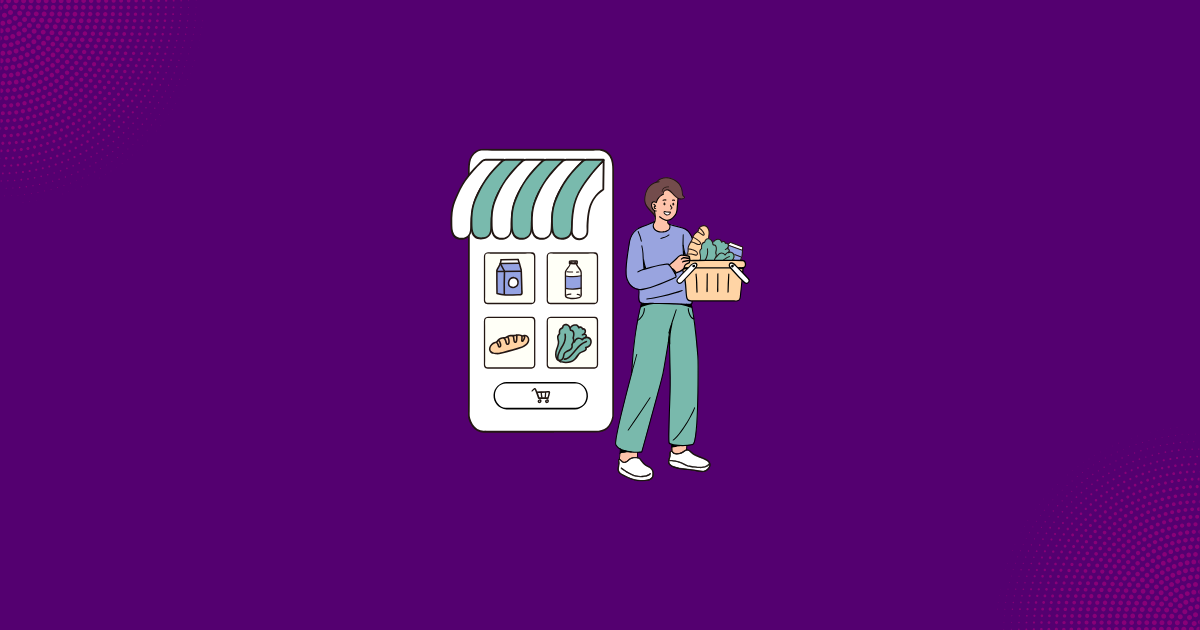
The average grocery customer visits the same store 1.6 times per week. The average DTC store? Most customers buy once and never come back. Yet both sell products people genuinely need and enjoy.
That gap should make every Shopify merchant uncomfortable. DTC brands pour money into acquisition - paid ads, influencer partnerships, elaborate launch campaigns - but rarely study the retailers who solved retention decades ago. The repeat purchase rate for most Shopify stores hovers around 25-30%, while grocery chains operate at 70%+ retention. The difference is not product quality. It is about systems that make buying again feel automatic.
This article breaks down six specific grocery brands repeat purchases tactics - from loss leaders to shelf placement psychology - and shows how Shopify merchants can adapt each one to build predictable repeat revenue online. The best ideas often come from outside your category.
Why Grocery Stores Are the Ultimate Repeat Purchase Machines
Grocery chains have refined repeat buying for over 80 years. The average American visits a grocery store 1.6 times per week, according to Food Marketing Institute data. That frequency is not accidental. It is engineered through predictable cycles, spatial design, and behavioral nudges.
Six core tactics drive grocery brands repeat purchases at scale: habitual purchasing cycles, loss-leader pricing, loyalty programs tied to frequency, shelf placement psychology, impulse buy triggers, and replenishment reminders. These are proven systems that grocery retailers have tested and optimized over decades - and DTC brands tend to ignore them completely. Acquiring a new customer costs 5-7x more than retaining an existing one, yet most DTC ad budgets allocate less than 20% to retention.
Habitual Purchasing Cycles - Making Buying Automatic
How Grocery Stores Build Habits
Grocery stores are masters of habitual purchasing. Weekly circulars create a predictable rhythm - customers know exactly when to expect deals. The consistent store layout means shopping becomes muscle memory, not decision-making. Seasonal rotations like back-to-school displays and holiday baking aisles trigger repurchase behavior without a single reminder email.
The DTC Translation
DTC brands can recreate these habitual purchasing cycles online. Create predictable promotional rhythms - monthly drops, seasonal collections, or recurring events - so customers anticipate purchases rather than waiting for random sales.
Replenishment reminders work best when timed to actual product usage cycles, not arbitrary email schedules. A coffee brand that emails at day 25 (based on average bag consumption) will outperform a generic "We miss you" message at day 14 every time. Subscription models serve as the digital equivalent of the weekly grocery run, but even without subscriptions, you can create purchase rhythms through seasonal prompts and restock reminders.
The Habit Loop Applied to E-commerce: Cue (replenishment email or seasonal prompt) leads to Routine (visiting your store) leads to Reward (a product they already trust). The key is timing the cue to match actual need, not your marketing calendar.
Loss Leaders and Product Positioning - What the Dairy Aisle Can Teach Your Product Page
The Loss-Leader Strategy
Grocery stores sell milk and eggs below cost to get customers through the door. The profit comes from everything else in the cart. This loss-leader strategy translates directly to e-commerce.
The DTC equivalent: a hero product priced aggressively to drive the first purchase, with margin built into complementary items. A skincare brand selling a $12 cleanser near cost knows the $45 serum and $38 moisturizer follow once a customer trusts the brand. The first sale is an investment, not a profit center.
Shelf Placement Psychology Goes Digital
In grocery stores, shelf placement psychology is a science. Eye-level products command 35% more attention, and end cap displays drive 30% higher sales than standard shelving. These are calculated behavioral interventions, not random merchandising.
"Digital shelf placement" follows the same principles. Which products appear first on your collection pages? Which get recommended after a purchase? Product page layout, homepage hero sections, and collection page ordering all follow the psychology that grocery merchandisers have refined for decades.
| Grocery Tactic | What It Does | DTC Equivalent |
|---|---|---|
| Loss-leader pricing | Drives foot traffic | Hero product at accessible price point |
| Eye-level shelving | Maximizes visibility | Homepage hero section, first in collection |
| End cap displays | Triggers impulse adds | Product recommendations, cart drawer suggestions |
| Checkout candy aisle | Last-minute additions | Post-purchase upsells, cart add-ons |
| Weekly circular | Creates buying rhythm | Predictable email cadence with value |
The grocery store checkout aisle is the original post-purchase upsell funnel. Those candy bars and magazines exist because someone studied when customers are most open to adding one more thing.
Loyalty Programs and Impulse Triggers - Building the Behavioral Engine
Loyalty Programs That Actually Drive Repeat Visits
The loyalty programs ecommerce brands try to replicate from grocery often miss the point. Grocery loyalty cards work because the reward is tangible, immediate, and tied to frequency. Kroger's loyalty program influences 96% of its digital sales - it is the engine of the business, not a nice-to-have.
The mistake most DTC brands make: points systems that take months to become meaningful. What works instead are milestone rewards tied to purchase count. "Your 3rd order ships free" is more motivating than "Earn 500 points for a $5 reward" because the goal feels reachable.
Engineering Impulse Buys Online
62% of grocery purchases are unplanned, according to the Point of Purchase Advertising International. Grocery stores place high-margin impulse items near checkout counters and at eye level to capture that behavior.
DTC impulse buy triggers follow the same principle. "Frequently bought together" widgets, limited-quantity add-ons in the cart drawer, and time-sensitive bundles serve the same function as the candy bar at checkout. The key difference: in-store impulse is spatial, while online impulse is contextual - it depends on what is in the cart and when the suggestion appears.
Sampling as a Gateway
Free samples at Costco are not generosity - they are calculated conversion tools. The DTC equivalent includes sample-size products, trial kits, or complimentary add-ons with first orders. Sampling reduces purchase anxiety for new products while introducing cross-sell opportunities that build toward the second and third order.
The Real Reason DTC Retention Falls Short (It Is Not Your Product)
Most DTC brands blame poor retention on product-market fit or competition. The real issue: they have never built systematic repurchase infrastructure. Every sale gets treated as a one-time event instead of the beginning of a relationship.
Grocery stores do not rely on "brand love" for retention - they rely on systems, habits, and friction removal. The DTC obsession with acquisition metrics (CAC, ROAS, cost per click) has created businesses that are excellent at getting a first order and terrible at getting a second. A walk-away customer who bought once and never returned is not a failed product. It is a failed system.
Your grocery store does not send you a "We miss you" email with a 20% off code. It puts the milk where you always find it, suggests the cheese that pairs with your wine, and makes checkout faster every time. That is retention.
To be fair, DTC and grocery differ in important ways - discovery, shipping costs, and digital friction present real challenges. But the underlying behavioral principles transfer directly. People are still people, whether they are pushing a cart through aisle seven or scrolling a Shopify collection page.
5 Steps to Build a Grocery-Level Repeat Purchase System for Your Shopify Store
1. Map Your Replenishment Cycle
Calculate actual product usage timelines for your top sellers. Time your outreach to arrive just before customers run out, not on an arbitrary 30-day schedule. Purchase history analysis reveals natural reorder intervals - use that data to replace guesswork with precision.
2. Create a Loss-Leader Funnel
Identify one product that can serve as an accessible entry point - your version of milk and eggs. Build margin recovery into the second and third purchases. The loss-leader strategy is not about losing money. It is about investing in the relationship.
3. Redesign Your "Digital Shelves"
Audit which products appear first on collection pages and in recommendations. Prioritize products with the highest repeat purchase rates in prominent positions. Use cart drawer suggestions to trigger the "impulse add" moment.
Smart product recommendations and cart drawer suggestions mimic the grocery end cap - surfacing complementary items when a customer is most receptive. Growth Suite's trending products and frequently bought together features help position the right product at the right moment, just like strategic shelf placement psychology in a grocery aisle.
4. Reward Frequency, Not Just Spend
Structure your loyalty programs ecommerce strategy around purchase count milestones rather than dollar amounts. Make the first reward achievable within 2-3 orders. Tangible, immediate rewards outperform distant point accumulation every time.
5. Reserve Discounts for the Right Moments
Grocery stores do not discount everything for everyone - they personalize offers based on purchase history. Use targeted offers for customers showing signs of lapsing, not blanket promotions that train everyone to wait.
The smartest grocery chains personalize their circular to each household. Online, the same principle applies - not every visitor needs a discount. Growth Suite identifies which visitors are likely to leave without purchasing and reserves time-limited offers for those specific shoppers, while dedicated buyers continue at full price. This protects your margins the same way a grocery store protects shelf pricing while running targeted loss leaders.
The Bottom Line
Grocery stores solved repeat purchases decades ago through systems, not luck. Six transferable tactics - habitual cycles, loss leaders, loyalty programs, shelf placement, impulse triggers, and replenishment timing - offer a proven playbook for DTC brands willing to look outside their own industry. The shift from acquisition-first to retention-first thinking starts with borrowing from industries that depend on customers coming back every single week.
The best DTC brands in 2026 will not just sell great products. They will build the kind of repurchase systems that grocery stores perfected long before e-commerce existed - making the next order feel as natural and effortless as a weekly trip to the store.
When was the last time you studied a business outside e-commerce for retention ideas? Sometimes the best playbook is already written - in a completely different aisle.
For Shopify merchants ready to move from blanket discounts to behavior-based retention, Growth Suite provides the visitor tracking, smart product recommendations, and personalized offer tools to build a repeat purchase system that works like the best grocery stores - systematically and without wasting margin.
Frequently Asked Questions
Why do grocery stores have higher repeat purchase rates than most DTC brands?
Grocery stores engineer repeat visits through predictable shopping rhythms, strategic product placement, loyalty programs tied to frequency, and replenishment-based timing. DTC brands often focus on one-time acquisition instead of building systematic repurchase infrastructure.
How can DTC brands create habitual purchasing cycles?
Map your actual product usage timelines and time outreach to match real replenishment needs. Create predictable promotional rhythms so customers anticipate and plan purchases. Subscription models serve as the digital equivalent of the weekly grocery run.
What is the loss-leader strategy and how does it apply to e-commerce?
Loss leaders are products sold at or below cost to drive customer traffic. In e-commerce, this translates to pricing a hero product aggressively to earn the first purchase, then building margin recovery into complementary products and repeat orders.
How do impulse buy triggers work differently online versus in-store?
In grocery stores, impulse is spatial - products are physically placed near checkouts and at eye level. Online, impulse is contextual - it depends on what is already in the cart and when recommendations appear. Cart drawer suggestions and post-purchase upsells serve the same function as the checkout candy aisle.
What is the biggest retention mistake DTC brands make?
Treating retention as a marketing problem (more emails, bigger discounts) instead of an experience design problem. Grocery stores succeed at retention not through constant promotions but through systems that make repurchasing automatic and frictionless.
References
- Food Marketing Institute - U.S. Grocery Shopper Trends
- Point of Purchase Advertising International (POPAI) - Shopper Engagement Study
- Harvard Business Review - The Value of Keeping the Right Customers
- Kroger - Annual Investor Report (Loyalty Program Data)
- Progressive Grocer - Shelf Placement and Merchandising Studies
- Bain and Company - Prescription for Cutting Costs (Retention vs. Acquisition)
- Shopify - State of Commerce Report (DTC Retention Benchmarks)
- McKinsey - The Future of Grocery Retail
Ready to Implement These Strategies?
Start applying these insights to your Shopify store with Growth Suite. It takes less than 60 seconds to launch your first campaign.
Muhammed Tüfekyapan
Founder of Growth Suite
Muhammed Tüfekyapan is a growth marketing expert and the founder of Growth Suite, an AI-powered Shopify app trusted by over 300 stores across 40+ countries. With a career in data-driven e-commerce optimization that began in 2012, he has established himself as a leading authority in the field.
In 2015, Muhammed authored the influential book, "Introduction to Growth Hacking," distilling his early insights into actionable strategies for business growth. His hands-on experience includes consulting for over 100 companies across more than 10 sectors, where he consistently helped brands achieve significant improvements in conversion rates and revenue. This deep understanding of the challenges facing Shopify merchants inspired him to found Growth Suite, a solution dedicated to converting hesitant browsers into buyers through personalized, smart offers. Muhammed's work is driven by a passion for empowering entrepreneurs with the data and tools needed to thrive in the competitive world of e-commerce.
More Insights from Our Blog
Continue reading for more expert tips and strategies to grow your Shopify store
10 Shopify Apps to Help You Sell More and Save Time in Q4 2026
10 Shopify Apps to Help You Sell More and Save Time in Q4 2026

60 Days Until Black Friday: What to Lock In This Week and What Can Still Wait
Black Friday is 60 days out. Some decisions get more expensive every week they stay open, and some get smarter. Here is how to tell which is which.
5 Numbers From Your Q3 Data That Should Decide Your Black Friday Offers
Your Black Friday offer is five settings, and Q3 already contains all of them. Read the five numbers that set depth, scope, mechanic, window, and audience.
Explore more
Resources
Shopify Upselling & Cross-Selling
Most Shopify stores leave 10-30% of revenue on the table because they do not upsell or cross-sell effectively. This...
Shopify Conversion Rate: The Complete Resource Hub
Your conversion rate is the most important number in your Shopify store. Learn how to measure it, diagnose problems,...
Shopify Holiday & Seasonal Campaign Strategies
Every holiday has its own shopping psychology. Plan year-round campaigns with the right discount, right timing, and...
Shopify Countdown Timer
Adding a timer takes 5 minutes. Making it convert without destroying trust? That's strategy. The complete guide to...

Shopify Cart Abandonment
70% of Shopify carts are abandoned. Learn why customers leave, how to prevent abandonment in real-time, and recover...
Shopify Discount
Master Shopify discounts without sacrificing your profit margins. Learn strategic discount techniques, timing...