How High-Margin Stores Decide Who Gets a Discount
 By Muhammed Tüfekyapan
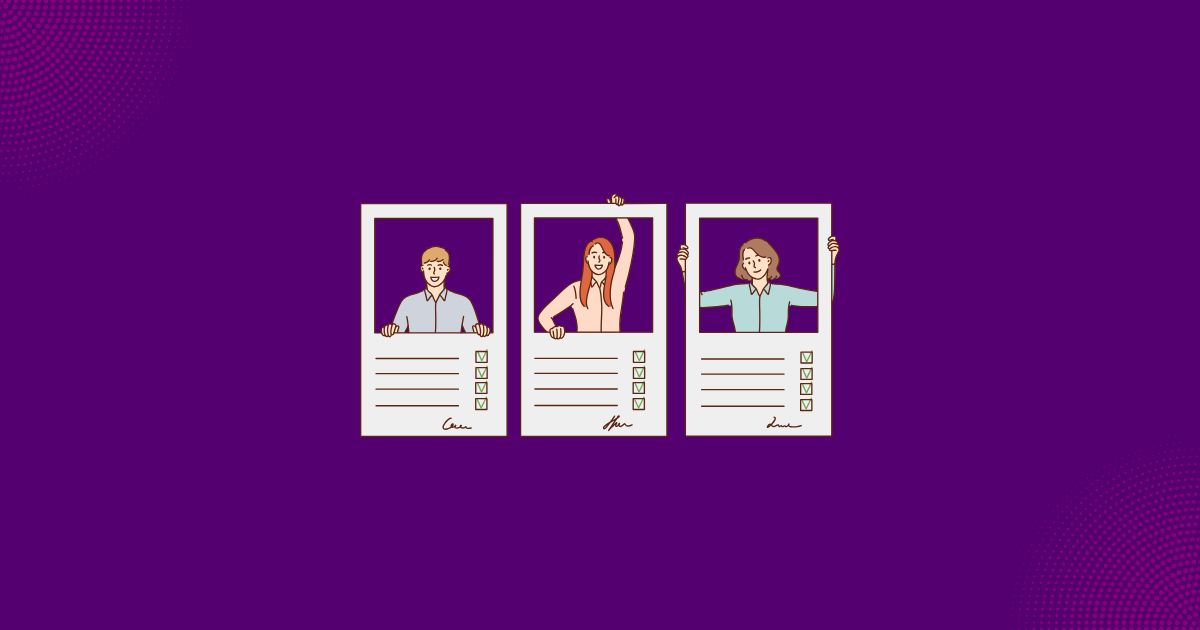
Two visitors land on the same product page. One reads every review, checks the size guide twice, and adds to cart at full price. The other glances, hovers, and drifts toward the back button. Give both of them the same 15% off, and you just paid one of them to do something they were already going to do.
Most discount advice argues about the number. Ten, fifteen, twenty percent. High-margin stores figured out a long time ago that the number is the least important part. The real question is who is standing in front of the offer. The same discount is a rescue for one visitor and a pure giveaway to the next. When you treat every visitor identically, the giveaways quietly eat the margin the rescues earned. That is how a store runs "successful" sales all year and still watches profit shrink.
This is how disciplined stores decide who qualifies for a discount and who does not. A simple way to think about it, plus the signals that tell you which visitor you are actually looking at. Start with the mistake almost everyone makes.
The Discount Is Not a Pricing Problem. It Is a Targeting Problem.
Merchants spend hours tuning depth. How much off? Should it be 10 or 15? Almost nobody spends the same hours on distribution. Who actually receives it? That second question is the one that decides whether the campaign made money.
A code like SUMMER15 makes no choice at all. It cannot tell the person who needed convincing from the person who was already sold. It just applies. That is not targeting. That is a price cut you announced.
Margin Leakage Hiding in Plain Sight
Here is why the problem survives: a misplaced discount does not look like a mistake. When a dedicated buyer uses your public code, the order comes through. The dashboard is green. Nothing breaks. But that customer was converting at full price, and you just cut the revenue on a sale you already had.
Multiply that across a busy sale week and the leak is real money. It never shows up as a "loss" anywhere you are looking. There is no line item called "discounts given to people who did not need them." So nobody looks for it.
The expensive discounts are not your deepest ones. They are the ones that land on customers who would have paid full price. Depth is visible. Misplacement is not.
The Only Two Customers You Are Really Serving
Strip away the personas and the segments. Every visitor on a product page is roughly one of two people.
The dedicated buyer is already convinced. They are comparing details, checking shipping, adding to cart. What they need is certainty, not a discount. The walk-away customer is interested but uncommitted. This is the "I will grab it later" browser who almost never comes back. For that person, a well-timed nudge genuinely changes the outcome.
The entire discipline of targeted discounting is telling these two apart before you spend margin. That is it. Everything else is detail.
Why the Difference Is Worth Money
Give a dedicated buyer a discount and you subtract from a sale you already had. Give a walk-away customer a well-timed offer and you add a sale you were about to lose. Same discount. Opposite economics. High-margin stores obsess over this split because it is the difference between a discount that pays for itself and one that quietly costs them.
| Dedicated Buyer | Walk-Away Customer | |
|---|---|---|
| Behavior | Reads reviews, checks variants, adds to cart | Skims, hovers, drifts toward the exit |
| What they need | Certainty on shipping, returns, fit | A reason to decide now |
| Effect of a discount | Subtracts margin from a sale you had | Recovers a sale you were losing |
| Right move | Let them buy at full price | Offer a genuine, timed nudge |
The Four-Question Qualification Test
"Segment your audience" is advice nobody can act on. Here is something you can. Before a visitor earns an offer, answer four questions. It turns a gut feeling into a rule you can apply the same way every time.
Run Every Visitor Through These Four Questions
- Are they showing exit intent, not buying intent? Deep engagement with reviews, variants and the cart signals a dedicated buyer. A discount is wasted here.
- Have they shown real interest? Time on a product page, a cart addition, a repeat view. An offer thrown at a bouncing visitor with zero engagement is just noise. The nudge is for the interested-but-leaving.
- Is this their offer, or a code the whole internet can use? A public code leaks to coupon sites and gets used by everyone, including buyers who never needed it. A code tied to one visitor cannot.
- Will the urgency be real? If the deal still works tomorrow, or the timer resets on refresh, you are not creating urgency. You are teaching customers your urgency is theater.
The Signals You Can Already See
You do not need a data science team to read intent. Time on page. Add-to-cart events. Pages per session. Return visits. Device, because a distracted mobile browser behaves nothing like a focused desktop shopper. All of it points toward buyer or walk-away.
The signals are not the hard part. Watching them for every visitor, in real time, and acting in the second that matters is the hard part. That is where this usually falls apart by hand.
A discount that everyone qualifies for is not a strategy. It is a price cut with extra steps.
This is the exact work Growth Suite automates. It watches those same behavioral signals in real time, predicts whether a visitor is a dedicated buyer or a walk-away customer, and only presents an offer to the ones likely to leave without buying. It also adjusts the offer itself, so a near-certain sale gets a lighter nudge and a barely-engaged visitor gets a stronger one. You stop over-discounting the sales you already had.
Making the Offer Worth Trusting
Picking the right person is half the job. The offer itself has to hold up. Two failures undo good targeting fast: leaked public codes and fake urgency.
Codes That Cannot Leak
The moment a code is public, it stops being targeted. It lands on coupon aggregators, and the buyers who were going to pay full price paste it in at checkout. Your careful targeting is undone by a browser extension. A unique, single-use code generated for one visitor removes the leak entirely. It works for that person and nobody else.
Urgency That Is Actually Real
A countdown that resets on refresh, or an offer that quietly still works next week, trains sharp customers to ignore your urgency forever. And they only need to catch you once. An offer that truly expires, where the code stops working the moment the timer ends, is the only kind that keeps its meaning. Genuine urgency is a tool. Fake urgency is a slow tax on trust.
Growth Suite handles both sides. Each offer uses a unique, single-use code that is deleted server-side when the timer ends, so it cannot leak or be reused. The countdown stays accurate across refreshes and tabs. And every visitor gets one real offer, with a cooldown before another, so you never train customers to expect a discount just for waiting.
What This Looks Like Over a Full Month
The payoff is not one clever sale. It is what stops happening across thirty days. Blanket discounting has three slow costs. Targeting avoids all three.
The Three Costs You Stop Paying
- Margin on buyers you already had. Dedicated buyers convert at full price instead of pocketing a code they did not need.
- Brand erosion. Customers stop learning the lesson that there is always a sale coming, so just wait.
- Wasted incentive. Every dollar of discount goes toward recovering a sale, not subsidizing one.
| Approach | Who gets the discount | What it costs you |
|---|---|---|
| Blanket sale or public code | Everyone, including full-price buyers | Margin leakage plus a "wait for the sale" brand |
| Targeted discount | Only walk-away customers | Discount spent only where it recovers a sale |
High-margin stores are not the ones that discount least. They are the ones that never discount the wrong person.
Decide Who Qualifies First. The Number Comes Second.
A discount is a targeting decision, not a pricing one. Who sees it matters more than how big it is. Every visitor is roughly a dedicated buyer or a walk-away customer, and only one of them should ever see an offer. Four questions sort them: exit intent, real interest, a private code, and genuine urgency.
Before your next sale, ask something you probably never have: who is this discount actually for? If the honest answer is "everyone," you are paying full-price buyers to do what they were already doing.
If reading intent for every visitor in real time sounds like more than you can do by hand, that is what Growth Suite was built for. It separates dedicated buyers from walk-away customers and delivers one genuine, expiring offer only to the people who need it, so your margin stays where it belongs. It is free to install on the Shopify App Store, with a 14-day free trial.
Frequently Asked Questions
Should every customer get the same discount?
No, and this is the core mistake behind shrinking margins. A single discount applied to everyone lands on two very different people: the buyer who was already converting at full price and the visitor who was about to leave. The first is a giveaway, the second is a rescue. High-margin stores give the discount only to the person who needs it, not to everyone equally.
How do I know which customers actually need a discount?
Read the intent signals you can already see: time on a product page, add-to-cart events, pages viewed, return visits, and device type. A visitor deep in reviews and adding to cart is a dedicated buyer who does not need an incentive. A visitor who showed interest but is drifting toward the exit is a walk-away customer, and that is the person a well-timed offer can genuinely bring back.
Do discounts hurt profit margins on Shopify?
Only when they land on the wrong person. A discount given to a walk-away customer recovers a sale you were losing, so it pays for itself. A discount absorbed by a buyer who would have paid full price is pure margin leakage. The sale still happens, so it looks fine on the dashboard, but you handed away profit for nothing. Targeting is what protects the margin.
What is a targeted discount and how is it different from a coupon?
A public coupon is the same code available to anyone, which means it leaks to coupon sites and gets used by buyers who never needed it. A targeted discount is generated for one visitor based on their behavior, usually as a unique, single-use code that cannot be shared or reused. One is a price cut for the whole internet. The other is a precise nudge for a specific person.
How do high-margin stores use discounts without training customers to wait for sales?
They avoid predictable, storewide sales that teach customers a markdown is always coming. Instead they present offers privately and only to visitors showing signs of leaving, with genuine urgency in the form of a code that truly expires, plus a cooldown so nobody is conditioned to expect a repeat. The discount stays a strategic tool instead of becoming a standing promise.
Ready to Implement These Strategies?
Start applying these insights to your Shopify store with Growth Suite. It takes less than 60 seconds to launch your first campaign.
Muhammed Tüfekyapan
Founder of Growth Suite
Muhammed Tüfekyapan is a growth marketing expert and the founder of Growth Suite, an AI-powered Shopify app trusted by over 300 stores across 40+ countries. With a career in data-driven e-commerce optimization that began in 2012, he has established himself as a leading authority in the field.
In 2015, Muhammed authored the influential book, "Introduction to Growth Hacking," distilling his early insights into actionable strategies for business growth. His hands-on experience includes consulting for over 100 companies across more than 10 sectors, where he consistently helped brands achieve significant improvements in conversion rates and revenue. This deep understanding of the challenges facing Shopify merchants inspired him to found Growth Suite, a solution dedicated to converting hesitant browsers into buyers through personalized, smart offers. Muhammed's work is driven by a passion for empowering entrepreneurs with the data and tools needed to thrive in the competitive world of e-commerce.
More Insights from Our Blog
Continue reading for more expert tips and strategies to grow your Shopify store
Grandparents Day Is Today: Turn One Thoughtful Gift Into a Holiday-Season Customer
Grandparents Day won't move September revenue, but it is the cheapest place to acquire a December gift customer. The gifter mechanism most stores waste.

Test Your Offers in September, or Guess Your Way Through November
An offer test is only as good as the traffic it runs on and the days left to act on it. Why November tests return guesses, and what September still buys.

Rosh Hashanah Starts Tonight: Acknowledging Your Customers' Holidays Without a Discount Code
A Rosh Hashanah greeting with a code attached is a campaign, not an acknowledgment. The message, the send window, and what to give instead of a percentage.
Explore more
Resources
Shopify Upselling & Cross-Selling
Most Shopify stores leave 10-30% of revenue on the table because they do not upsell or cross-sell effectively. This...
Shopify Conversion Rate: The Complete Resource Hub
Your conversion rate is the most important number in your Shopify store. Learn how to measure it, diagnose problems,...

Shopify Holiday & Seasonal Campaign Strategies
Every holiday has its own shopping psychology. Plan year-round campaigns with the right discount, right timing, and...

Shopify Countdown Timer
Adding a timer takes 5 minutes. Making it convert without destroying trust? That's strategy. The complete guide to...

Shopify Cart Abandonment
70% of Shopify carts are abandoned. Learn why customers leave, how to prevent abandonment in real-time, and recover...
Shopify Discount
Master Shopify discounts without sacrificing your profit margins. Learn strategic discount techniques, timing...